
A resurgence of scam emails has flooded students’ inboxes in the past weeks, raising concerns about digital security and the protection of personal information on campus.
The emails often appear to come from seemingly familiar or trusted sources, using the likeness of university faculty, students, or reputable companies. Most emails claim that job opportunities require an immediate response, issues with their accounts, or a promise of money. Despite the emails looking like they are from peers and professors, these are emails created by hackers looking to steal students’ information. According to Abnormal Security, universities are targets for hackers due to the large amounts of personal information they have.
These emails are commonly part of phishing scams that are designed to obtain personal information like login credentials, banking details, etc… Some messages include links that direct people to fake websites that resemble official platforms. Others may contain attachments that, when clicked, could install ill-intentioned software.
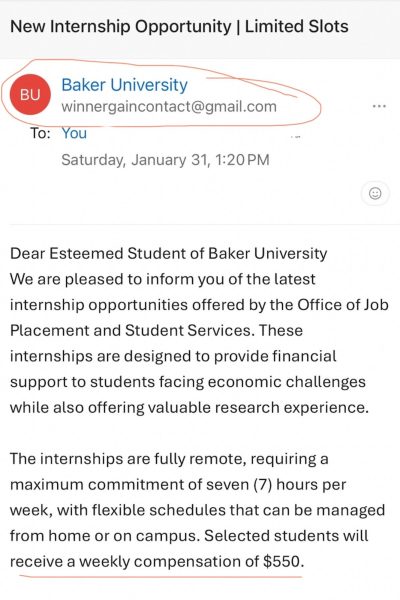
Students should be advised that legitimate campus departments do not request passwords or sensitive personal information through email. Several warning signs can help students identify scam emails. Messages that contain grammatical errors, unfamiliar sender addresses, sender addresses that do not end in the official Baker domain, or pressure to act quickly are common indicators. Emails that seem “too good to be true”, like high-paying remote jobs or internships, are also frequently scams.
While these phishing attempts aren’t new to Baker, the recent increase is a reminder for students to remain cautious and informed when interacting with emails from unknown senders. Taking a moment to verify a message before clicking anything or responding can prevent identity theft, financial loss, and other things alike.
Students who have interacted with a scam email should change their passwords and notify campus IT to limit potential damage.