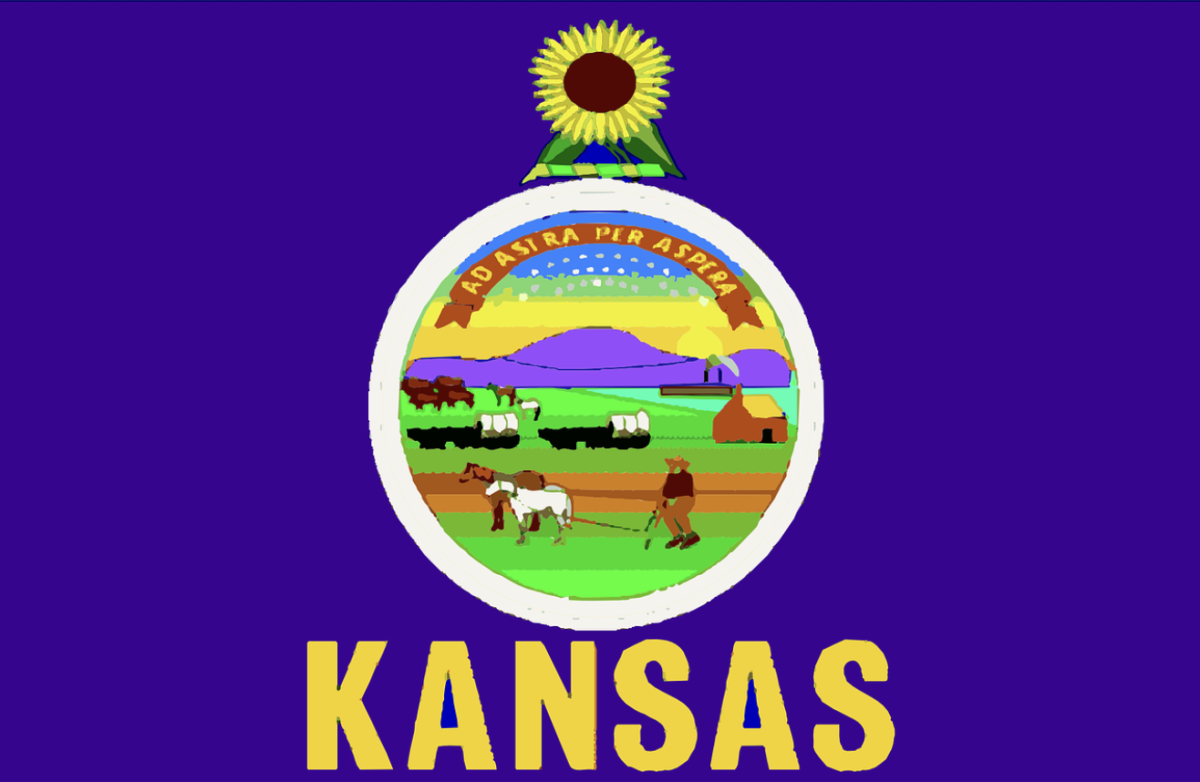
“Ad astra per aspera,” translated as “To the stars through difficulty,” is the motto of Kansas. While many brand Kansas as a state of wheat, tumbleweeds and flatlands, the slogan signifies the work ethic and passion present within every citizen. In honor of this distinction, here are five films not only set in Kansas but also embodying the spirit of the state.
To start, how about a film that needs no introduction: “The Wizard of Oz.” If you haven’t been asked about this classic by somebody from out of state, are you really a Kansan?
One could make a strong case for Judy Garland as the defining actress of early American cinema, with her performance as Dorothy Gale serving as definite proof. Playing a young girl on the cusp of adulthood, threatened by the demands of her reality, Garland guides the audience through a vivid journey full of colorful lands and friends beyond imagination.
The first film to combine black and white with color cinematography, “The Wizard of Oz” remains the original, and essential, fantasy film.
Jumping forward about 70 years, we have “Hedwig and the Angry Inch.” Written, directed by and starring John Cameron Mitchell, this queer musical of love and loss is essential viewing.
Born in Germany before moving to Junction City, Kan., at 27, Mitchell’s Hedwig embodies the American dream and Midwestern determination with every live glam rock number. Whether accompanied by hand-drawn animation, blue-tinted flashbacks or earnest moments of self-reflection, the music is anything but secondary to the film.
Though more alternative than most Kansas-set films, “Hedwig and the Angry Inch” delivers a passionate message with respect to nothing but itself. Fiercely exploring gender politics and the uncertainty of self-discovery, this film gives a warm hug and reassurance: ‘It’s OK to be you.’
Now going back in time, award-winning photographer and director of “Shaft,” Gordon Parks conjures up a deeply personal coming-of-age story with his film “The Learning Tree.” Based on his autobiography of the same name, it was the first Hollywood studio film directed by a Black filmmaker and remains a seminal work in film history.
Starring 18-year-old Kyle Johnson as Newt Winger, Parks’ surrogate protagonist, the film follows his upbringing in Cherokee Flats, Kan. As Newt faces racist police, vengeful bullies and his first love, the story unfolds with a sense of empathy that resonates today.
Though comparison is the thief of joy, one can’t help but describe this as Rob Reiner’s “Stand by Me” with Black youths at its center, facing even more violent and uncertain circumstances than the former film could imagine.
Do not let Philip Seymour Hoffman’s demeanor in the film “Capote” dissuade you: despite the distinctive voice, the titular character proves how detrimental it can be to underestimate others. As Hoffman’s Capote says in the film, “Ever since I was a child folks have thought they had me pegged because of the way I am, the way I talk. And they’re always wrong.”
Earning Hoffman an Academy Award for Best Actor, “Capote” follows the writer’s journey of self-discovery amidst an ever-changing society. Alongside his friend Harper Lee, played by Catherine Keener, Capote investigates the Cutter family murders in Holcomb, Kan., while forming a complicated bond with one of the perpetrators. This film artfully portrays a struggle in journalistic ethics eerily poignant for us all in 2026.
Finally, we have 1992’s “Unforgiven,” directed by Hollywood legend Clint Eastwood. Though shot in Alberta, Canada, Eastwood’s gritty western captures the desolate landscape of the Kansas plains while depicting the erosion of trust in the Wild West.
Starring Eastwood and Morgan Freeman as outlaws in pursuit of a violent criminal, the pair encounters the belligerent and ruthless Sheriff “Little Bill” Daggett, played by Gene Hackman. Eastwood’s Will Munny wants to leave his violent past behind, but what if that past is the only key to protecting others?