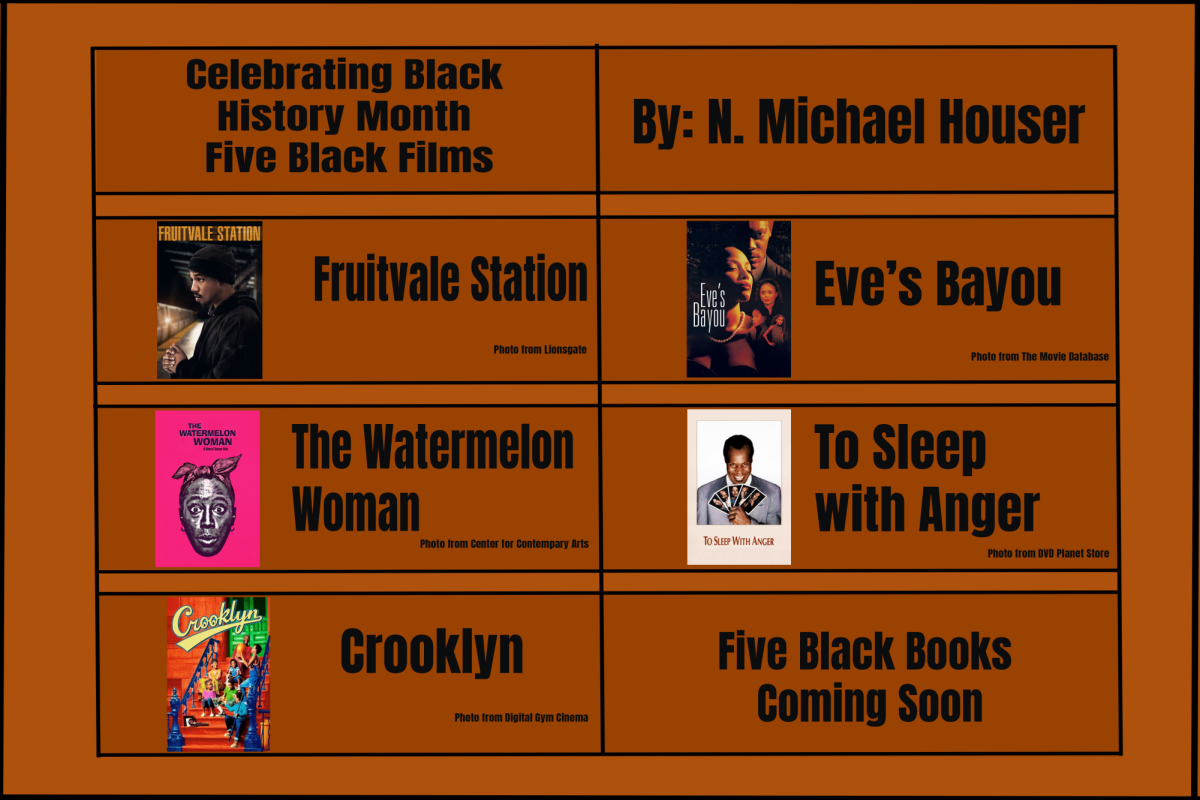
Round two, y’all know what’s going on. It’s Black History Month, and I’m here to share some awesome movies made by Black filmmakers and featuring extraordinary work from Black actors, crew members and visionaries of all kinds. These soundtracks? Perfectly orchestrated. The cinematography present? Out of this world. These third acts? As climactic and emotional as you’ve ever seen. In an industry overrun with white movies by white people, enjoy these films for their historical clarity and imaginative visuals rooted in Black history and culture.
Fruitvale Station (Directed by Ryan Coogler)
Everyone and their mother has heard of “Sinners” by Ryan Coogler: the new Oscar nomination record holder, the cultural landmark which made waves across 2025, and Coogler’s fifth directorial effort alongside Michael B. Jordan. However, if you’re a film buff who hasn’t seen their first venture together, you are completely missing out on the unique, 13-year-long chemistry this actor and director have developed.
Telling the real story of Oscar Grant’s last day before being killed by police in 2009, Coogler shies away from tragedy for the sake of tragedy. While many directors like to make films which bash you over the head with horrific scenes to get their point across, Coogler saves the stress and violence until the final 30 minutes of the film, a decision which centers Grant as a human being caught in a horrible twist of fate and gives time to show his life and the lives of his loved ones. Jordan is phenomenal in capturing this fleeting sense of hope which pervades the film, and which still feels incredibly inspiring to watch despite how the story must end.
This will tear your heart out which may sound scary, but in doing so you can be reminded where your heart is.
Eve’s Bayou (Directed by Kasi Lemmons)
Come for Samuel L. Jackson, stay for Kasi Lemmons’ gorgeous directorial style. With her film debut “Eve’s Bayou,” Lemmons puts up her dukes to rival William Faulkner and Harper Lee in this Southern gothic-soaked familial horror story, using the aesthetics of such authors to recreate a touching yet terrifying landscape of Black life in the ’60s.
Starring Jurnee Smollet as the titular Eve Batiste and Meagan Good as her older sister Cicely, the film begins as a curious look into the Batiste’s father Louis (Jackson) before spiraling into a cerebral, psychedelic and terrifying world of mistrust and fear as only a child could experience. In this way the film shines brightest, with many scenes focused on the scared state Eve is in while still offering visual subtext and cues for the audience to piece the full story together. And this came out in 1997! Imagine Netflix producing a TV show or movie nowadays that could say the same…
Watching this movie felt like reading a Toni Morrison novel, which may be the highest compliment I could ever give a film.
The Watermelon Woman (Directed by Cheryl Dunye)
By turning a playful picaresque and a meta exploration into Black history and representation, Cheryl Dunye will blow your mind off as yet another perfect debut by Black women. But I wouldn’t recommend this if race were the only focus – “The Watermelon Woman” is a masterpiece because it is intersectional, too, and heavily incorporates Black queer culture and history into its proverbial viewfinder.
You don’t have to be Black nor a lesbian to enjoy this film about Black lesbian love. Director Dunye is so empathetic as a filmmaker and so energetic as the film’s lead, similarly named Cheryl, that you can’t help but see yourself in her idea-driven, curious and perhaps vapid personality throughout the short 82 minute runtime. Yet not only is this a great movie to think about, it’s arguably even more fun to watch as Dunye incorporates digital camera footage along with film cameras and fake archival photographs and footage, constructing for herself an entire world you could never imagine unless you watch this film and step into it.
A multimedia hodgepodge of academic study and cultural observation, this film remains incredibly fun and engaging to experience.
To Sleep with Anger (Directed by Charles Burnett)
Danny Glover, what can’t you do? I ask myself this every time I watch a film he stars in, and unfailingly I never have an answer; he captivates the screen with wildly different vibes across his filmography, yet he has never been so sinister as he was in this film by the legendary Charles Burnett. Starring Glover as Harry, an old friend coming into town to visit his school buddies, the film depicts the worst case scenario that could occur following such a visit.
Though he first appears simply overstepping conversational bounds with his friends’ family, gradually Harry becomes the serpent in Adam’s ear for young son Babe Brother, encouraging him to feed his base emotions and lash out at all those around him. Like “Eve’s Bayou,” this film has a magical quality to it: whether it be the simple yet emotional cinematography, an ensemble cast of incredibly believable actors, or Burnett’s script and direction, “To Sleep with Anger” sweeps you off your feet and doesn’t put you down until a body drops.
If you liked Danny Glover in the “Lethal Weapon” franchise or even Wes Anderson’s “The Royal Tenenbaums,” do yourself a favor and watch him command every scene in this movie.
Crooklyn (Directed by Spike Lee)
Despite being an avid Spike Lee fan, I had no idea how much I would love the collaboration of him with his sister, Joie Lee, when I first watched the beautifully captivating “Crooklyn.” An autobiographical depiction of the Lees’ upbringing alongside their additional three brothers and jazz musician father (played gorgeously by Delroy Lindo), the film is one of Lee’s most heartfelt as it incorporates the loves, trials, memories and pains experienced during he and his siblings’ childhoods.
Where this film starts is nowhere near where it ends, both emotionally and cinematographically. About two thirds through the film, Joie’s insert protagonist Troy travels south to live with her extended family and the screen becomes scrunched like you’ve never seen before. When I first watched this film, I thought my TV was broken as a matter of fact. But now that you as a reader know this you can more greatly appreciate the discomfort it causes, even how it makes you squint your eyes; Troy feels exactly the same.
Emotional and creative like we’ve come to expect from Lee, “Crooklyn” is a gem in a filmography full of similarly shiny stones.
Thank you all once again for reading through this celebration of Black art, and remember: when small voices get to tell their stories, millions benefit from their representation and emotive feeling, especially in the medium of film. History has never felt more interactive than when watching a movie like one of these five above, as the unique experiences and culture drawn upon to create them by their directors imbues them with a spirit that fails to dissipate even after two, three or a thousand viewings. Prepare yourselves for next week’s picks for five pieces of Black literature you should have in your life, and don’t ever stop loving art: without it, what could we ever be?