
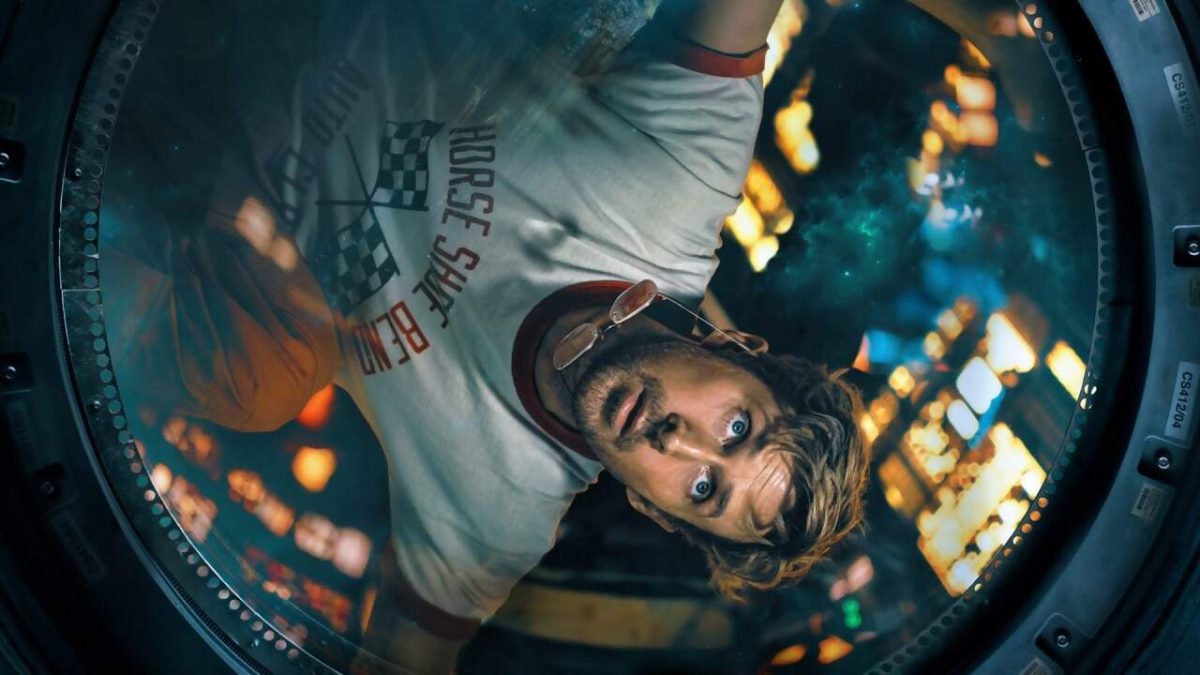
Phil Lord and Chris Miller’s “Project Hail Mary” is a deep exploration into space, but relies on the emotionality of human emotion at the forefront. Based on the 2021 Andy Weir book of the same name, the entire crew of the movie takes big swings to make this the first blockbuster of 2026.
The film takes a glimpse into the desperation and hope that many sci-fi dramas rely on. It takes an almost-cliche format, as Ryan Gosling’s Ryland Grace wakes up with no memory of where he is and what is going on. The non-linear storytelling throughout gives us different glimpses into the past and present of the potentially apocalyptic situation at hand, in which Grace’s memory slowly returns and we all come to understand the breadth of the situation: the sun is dying and there’s no inkling of a reason as to why.
Ryan Gosling is the soul of the film, once again proving his star-caliber status. While his career has been swaying into the trajectory of a comedic actor (which this movie allows him to boast his expertise in), the film ultimately hinges on the somber aspects of his character by dealing with the scope of the mission, the choices of his past and the loneliness he feels throughout.
Gosling delivers a deeply human and authentic performance, one which makes it hard for anyone watching to not fall in love with him. Grace is a flawed man, very staunch in his own beliefs — a brilliant scientist/teacher who is scared, selfish, and cowardly. Yet, through the duration of the film we see each side of him meld together as he must leave the selfishness and cowardice back on Earth and grow as a person, which occurs mainly through his friendship with Rocky.
If Gosling is the soul of the film, then Rocky is the heart — an alien with perfect comedic timing who just so happens to look like a bundle of rocks. He’s on a similar mission to Grace, as his sun is dying as well and his crew has also passed away to leave Rocky all by his lonesome. The friendship between the two steals the show, completely captivating from the first scene to the last as it’s built through warmth and sincerity all while the gravitas of the situation looms over them.
Rocky is a practical puppet, manned by six people with James Ortiz being the head puppeteer and voice of the character. This is just one choice the film takes to go against the grain of the movie industry. Another is the decision to stray away from green and blue screens, instead opting for a completely practical set for the spacecraft and relying on lighting to mimic the stars and space. Lord and Miller have a history of directing silly, goofy films for people to enjoy (such as “The Lego Movie” and “21 Jump Street”), which caused this film to feel like a surprising exercise that showed their directing skills.
“Project Hail Mary” left me in awe. Multiple times throughout my watch in the theater I felt that I was floating through space, completely encapsulated by the scenery presented. The beauty of space depicted through certain scenes were enough to make me tear up and forget that I was surrounded by 100 other people. During my screening, I laughed, I held my breath, I nearly cried and I clapped when the credits rolled.
“Project Hail Mary” serves as another notch in the belt of the dystopian and somber film genre. It starts with a bleak idea, but ends with a hopeful and impassioned feeling of “life goes on,” one that any movie-goer can be inspired by. Who would have thought that all of this would come from a near 3 hour movie where Ryan Gosling is best friends with a rock?